A Ukrainian student, who speaks nearly no English, brings a map and photos to class.
The map shows her home, and its proximity to Russia. Her quivering finger moves across it showing us her escape route. Border-to-border, across Ukraine. Romania. Germany. The U.S.A.
She moves from photo to photo. “Our central park.” Before, and after.
“Capitol building.” Before, and after.
Her house, out of photo’s view by centimeters, “here,” her finger rests. The building in view, demolished.
Ice-scarred trees at six-plus feet will testify for decades to come of the Maumee River’s unwelcome rush into the cemetery where Mom and Dad are interred. She knocked over gravestones, carried some away to heave elsewhere, cracked others, and deposited countless tons of ice plates and river-bottom mud well above a grown man’s head through the entire grounds.
After more than a month, the street leading to the cemetery finally opened, but the drive leading to the section where Mom and Dad are interred remains closed. Though receding, mud-packed ice plates are still stacked 2-3 feet high there, covering hundreds of feet of ground. A “No Pedestrians” sign is posted, lest we think it is only vehicles that are not allowed access. But the drive leading in has been cleared, and today I couldn’t resist ignoring the signs and barrier, to get as close to Mom and Dad’s site as possible.
I’ve told many friends and family how guilty I feel — how petty — for pre-mourning the loss of the endearing little ceramic angel I had placed at Mom and Dad’s stone. As I walked toward the site, I searched the mountains of ice with my eyes, just in case. Getting closer, I spotted a surprising sight. A bit beyond where I would place Mom and Dad’s stone to possibly be, a large gravestone stands upright. An approximately 6-8-foot clearing surrounds it. Clearing. As in grass. Ground. A curious thing, and I can’t figure out how it came to be. And in the middle of that little clearing was what looked like a chunk of not-yet-melted muddied ice.
But at that point, my eyes were welling, because all signs pointed to this being a loving and amazing God-gift. And it was. And it is. And she was muddy, but otherwise completely intact. Not a chip. Not a scratch. Still close to “home.”
I also soon realized there was a small path clear enough to get around the dangerous ice heaps, just enough to retrieve her. God amazes me. We endure difficulties, for certain. But He makes His love and presence and tenderness and sovereignty known in ways that speak to our own heart. Sometimes even when we are petty, and disobey the no pedestrians sign.
And He wasn’t done. As my husband Keith and I were walking back toward the truck, we spotted my daughter Deanna. She was on a quick break from her Yoga Teacher Training classes. She had her lunch with her, and had intended to eat it quickly where her classes are. But she felt drawn to drive to the cemetery, and felt a nudge that she would see Keith and me there.
There was no reason for her to believe that. There was no reason for her approximately 15 unplanned minutes to overlap with our approximately 30 unplanned minutes.
Just as there is no reason for a little ceramic angel to survive a cataclysmic ice-flow flood and freeze, and then make her little muddied white self known in a sea of muddied white.
But, God…
____________________________________
Today is the fourth anniversary of this event. Every detail in this that I wrote then is true. This may not be a poem, but it is a tribute to my downright poetic God, who leaves me in awe.
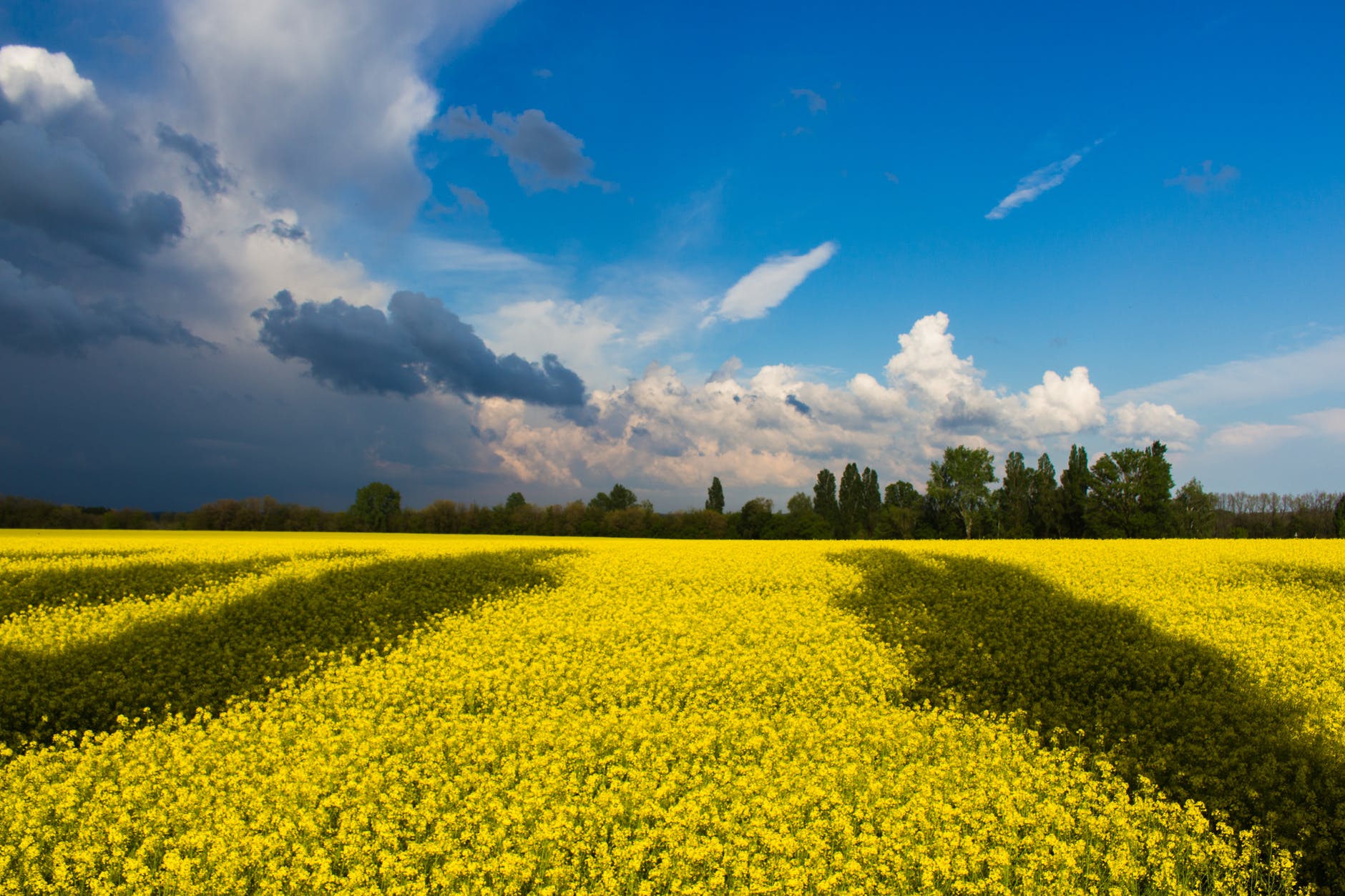
Even their shadows hide beneath dark sky and grim state as they make their way of escape from dark to dark – or watchfully, vulnerably wait to face night’s peril as I write this poem in my recliner in stream of sun while cheerful flowers named for same flourish on my screen.
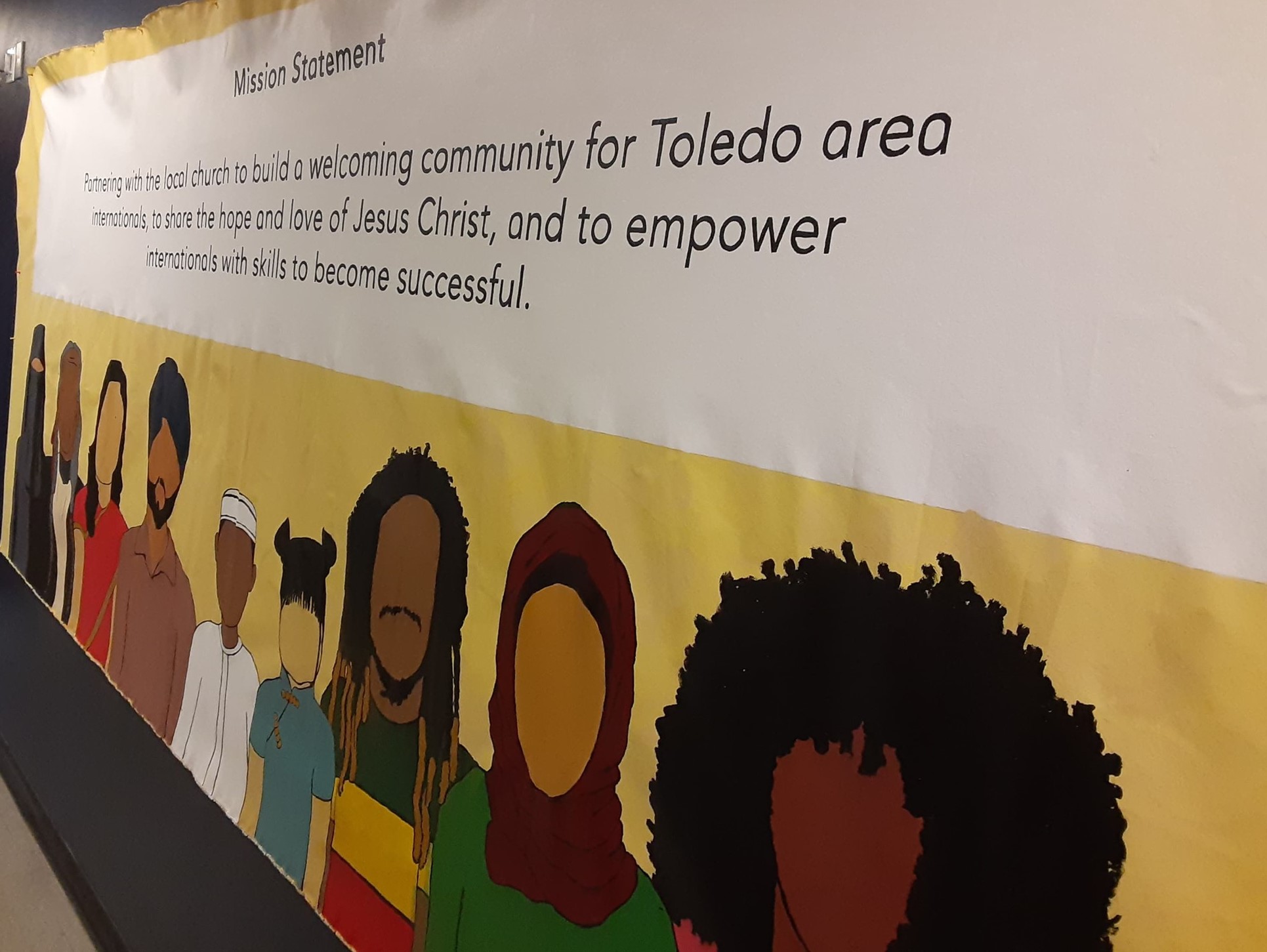
They come to my city from distant lands – Homelands. Their reasons, many and varied – most, too heartrending to ponder.
They arrive parched – a desiccation born of dearth and death. Thirst knows no race, class, religion, or language. It knows only burning need for a well of hope from which to dip.
The ache of a woman, isolated in a strange new residence and unable to connect to life-giving resources, drowns in unanswered questions. She holds no words to pose them, and no near ear to hear her broken attempts. She thirsts at the well of understanding.
The profound pain of parents daily delivering their children into the hands of strangers who struggle to teach and to reach these children who hear only indistinct sound, and see the blank stare of confusion. Parents, unable to engage, thirst at the well of advocacy.
The fatigued fret of the soul weak with illness who has no visible path to wellness. The one whose world is silent, limited, and invisible. This soul thirsts at the well of wellbeing.
The yearning of a man to make known his skills, let alone make use of them to provide as he once did. To make known his intent to be self-sufficient. To be quickly found to be hardworking and capable. He thirsts at the well of opportunity.
The deep craving of the foreigner to make known their honorable intentions. To prove they are grateful and giving; loving and fun-loving; brave and tender. They thirst at the well of accurate perception.
They arrive parched from a common thirst – a thirst ready to be quenched in a city flowing with Water for Ishmael.
In Genesis 21:14-20, we read of Hagar and her son Ishmael, who were sent to the desert to die. God heard the boy crying from thirst, and He provided a well from which to drink. Water for Ishmael is named for this scripture passage. WFI’s intent is to quench the thirst of the “strangers in the desert,” by following the instructions of Leviticus 19:34: “You shall treat the stranger who sojourns with you as the native among you, and you shall love him as yourself, for you were strangers in the land of Egypt: I am the Lord your God.”
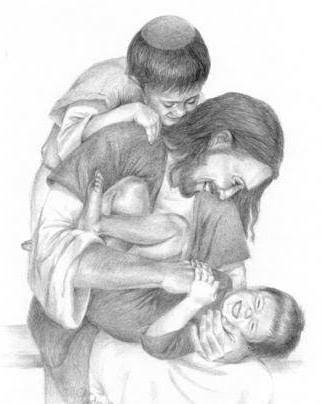
They say that wisdom comes with age. It has a name: We call it, “sage.” But Jesus set the record straight when friends of His who, in debate, approached Him, asking (well, demanding), “Who in heaven’s most outstanding?” No pause needed, Jesus smiled and placed before them one small child.
Home Is The state Of my heart: Heart-shaped Ohio. “Ohio, The Heart of It All,” Is more than its slogan, to me. It’s a certainty Born of dappled sunlight, porch swing swishes, marching bands, sure love, and lingering laughter.
She spent the entire afternoon asking me relevant, insightful questions about the school’s students, staff, and mission. How do you teach babies and preschoolers a second language? What countries do they come from? What languages are spoken? Which is the most common? (She made note of Arabic, and couldn’t wait to ask her mom if she can begin studying it via Rosetta Stone or Duolingo). Would I please contact the volunteer coordinator to see if it is acceptable for a ten-year-old to volunteer to help the adults care for the children? Are masks required? Is there a dress code? Is there a form her parents could complete and sign, giving her permission to volunteer there? Even if they can’t let her volunteer yet, can she take a tour of the school, and meet the staff? Oh, and would I please tell them she is mature for her age?
Eager native sprout seeks to share energy to root and bloom transplants.
We walk around the park’s pond, eyeing mallards and geese, clear blue skies. Tree blossoms of white, pink, and purple dapple sunlight on the greening grass and manmade path at our feet.
Lilacs scent the breeze, as does the pleasing sound of improving English from my brave and delightful friend. She speaks of her sweet/smart girls, (the youngest of which, with her large dark eyes and dark golden curls, holds tight her momma’s hand, and her little bag of chips), Syrian war, and lost and scattered family.






 pictured words